17 Zion lifted her hands in prayer,
but there was no one to comfort her;
the LORD ordered Jacob’s enemies
to beset him on every side.
In their midst Jerusalem became
an unclean thing to be shunned.
Lamentations 1:17 [The Revised English Bible (Cambridge; New York; Melbourne; Madrid; Cape Town; Singapore; São Paulo; Delhi; Dubai; Tokyo: Cambridge University Press, 1996)]
“I’m praying.”
This is one of the most common comments among Christians, combined with “I’ll pray for you,” or “you’re on the prayer list.”
Honorable (or dishonorable) mention goes to “We’re sending thoughts and prayers.”
To back up our prayer claims we tell stories of answered prayer, whether from scripture or from our own lives. Daniel in the Lion’s Den makes a good example. Spending the night with hungry lions and coming out uneaten is quite a feat!
We’re less likely to talk about the times in scripture when praying didn’t come out so well. This verse is a good example.
Zion is praying, and we know the outcome. Exile is coming. The verse says God has commanded it. The prayers are not answered, not positively. Destruction comes.
Why is that?
One reason is that people are doggedly pursuing a path of destruction. If I get drunk, jump in my car, don’t wear my seatbelt, and proceed to drive recklessly, there are certain likely results. The best is actually if I get pulled over and charged with DUI. The worst is death—mine, or that of an innocent person.
But I prayed!
Yes. And God was probably trying to get through with an answer, but as I drove down the path to destruction, I wasn’t able to hear the answer.
Our verse says that the Lord ordered Jacob’s enemies to beset him on every side. Was God really trying to destroy Judah? It’s worthwhile studying this entire period of Israel’s history, not to condemn, but to learn from it.
Often God has us beset on every side, by wise counselors, by the prompting of the Holy Spirit, and by the unrelenting force of the laws of nature. If we don’t allow those barriers to derail our ride to destruction, who do we have to blame?
For years, I worked in IT, helping small businesses. I regularly told people that I could provide security tools and practices. Antivirus software could protect them. The one thing I regularly couldn’t protect someone from was their own actions. If you have a password and a secondary code that are both required for access, and you go ahead and give both of these to a bad actor, no amount of other security will protect you.
I remember a call from a client who said she had just accidentally opened what she was sure was a bad email attachment. I asked her what she had done. “Just what you told me to do. I shut down the computer as soon as I realized it.” I was able to get her system cleaned up and running in less than an hour. (The bad payload was ransomware with high potential to make one’s life miserable.)
At another office I walked up to a workstation to do some routine maintenance and noticed suspicious activity right on screen. I asked the user how long this had been going on. “Oh, I don’t know. Probably all day.” More than 12 hours and considerable expense later, the business got its network back. (Secure backups are wonderful!)
The software was there, the tools were there, the policies were there. Two very different results.
“I’m praying, Lord!”
“Yes, but are you listening?”
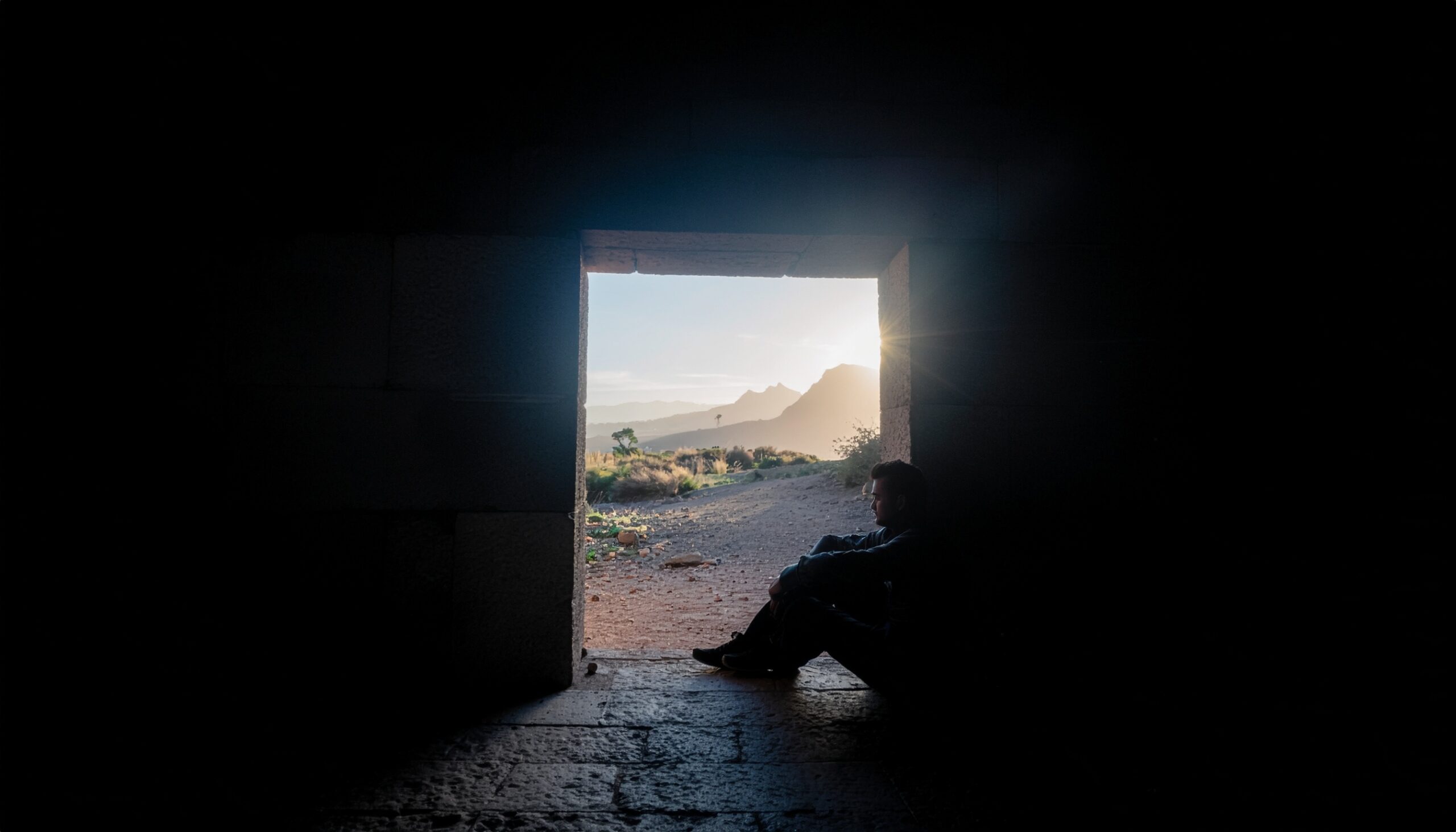
(Featured image generated by Firefly 4 Ultra according to a prompt generated by Gemini.)