From my Twitter feed:
When you sit with a griever, your work is to be with them where they are, not drag them out where you are more comfortable.
— Diane Langberg, PhD (@DianeLangberg) April 28, 2022
Truly excellent advice!
From my Twitter feed:
When you sit with a griever, your work is to be with them where they are, not drag them out where you are more comfortable.
— Diane Langberg, PhD (@DianeLangberg) April 28, 2022
Truly excellent advice!
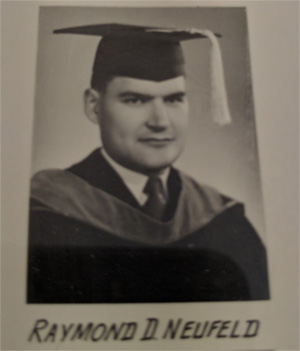
Ten years ago my father passed away. Due to unforeseen circumstances, I was asked to provide the eulogy. I rarely use a prepared text when preaching but in this case I thought that my emotions might interfere so I did.
I wanted to post it today in honor of dad 10 years after his homegoing, but I couldn’t find the file. I’m a pack rat about files, so that surprised me. Thanks to the help of my sister Betty, my mother, my sister-in-law Aydah, and my brother Robert (especially!), the file was found.
I thought of posting it at the time, but there was too much emotion involved. Now I think it’s right.
I am a privileged man, privileged to have parents who loved me, provided for me, encouraged me, and provided a good example for me. The word “privilege” is used a lot now, but privilege shouldn’t be seen as a bad thing. Nor should it be denied. My privilege gives me a duty to share, to help make the lives of others more privileged. Often we take the things that we have received through no action of our own and we take them as a way to feel better than others, more special. Instead, I believe our privileges give us greater responsibilities.
Dad was a person who shared and helped make the lives of others better. It is that example that I remember daily. There are many people whose lives are better because they encountered my father. That’s what we should each hope.
Here are my words at his memorial. Note that I use the KJV which dad read all his life. He didn’t object to modern versions, but the KJV was an old friend.
Memorial Talk for Dr. Ray Neufeld, 10/10/06, by Henry Neufeld
We’re here to celebrate the life of Dr. Ray Neufeld, doctor, father, brother, grand and great-grandfather, uncle, missionary, and humble disciple of Jesus. Most of you have your own stories and your own memories. Much of the time I spent with dad was related to electronics and particularly to amateur radio. He had an ease with understanding electricity and radio that led him to eventually test for and receive an Amateur Extra class license.
He was involved in this hobby most of his life and used it in the mission field. Robert recalls receiving a call from an amateur operator in Tennessee when he and our sister Betty were attending Highland Academy, and the rest of the family was in Mexico. A number of people on our mission station had been poisoned, and he was seeking help from a poison center at Vanderbilt University. Somehow the message didn’t tell just who was poisoned, so Robert and Betty had to wait days for the mail to bring more detailed news.
Our cousin Lolita remembers waking up to the static as her father, Don Neufeld, tried to contact dad in Guyana. With the price of long distance phone calls, it was one of the key ways we kept in touch with family at home.
Patty’s memories of the mission field include following the map and directing dad through villages in Mexico as he drove our station wagon and trailer over roads they were never intended to survive. All of us had times of getting as close to medical procedures as we could wish—for some of us much closer than we wanted. I recall standing on a chair and holding a flashlight on a surgical site after the power generator had failed in the midst of surgery.
Grandson Bob Neufeld (Robert’s son) tells of dad teaching him carpentry using the coping saw, and Robert remembers Dad making a model boat for him, though he wasn’t taught to use the tools.
But the key fact of dad’s life is one of faith. I searched for balance in this presentation between the stories of his life and his faith, but faith was central for him, and so I feel that it should be central here. I recall asking him when I was a teenager what would happen if he found out that there was no God, no heaven, and no hell. He told me that he hoped he would have lived his life in the same way he did.
And so I turn to the scriptures from which dad received strength, encouragement, and challenge daily as he went through life. I’m going to read from Hebrews 11:32 through 12:3.
And what shall I more say? for the time would fail me to tell of Gideon, and of Barak, and of Samson, and of Jephthah; of David also, and Samuel, and of the prophets: (33) Who through faith subdued kingdoms, wrought righteousness, obtained promises, stopped the mouths of lions, (34) Quenched the violence of fire, escaped the edge of the sword, out of weakness were made strong, waxed valiant in fight, turned to flight the armies of the aliens. (35) Women received their dead raised to life again: and others were tortured, not accepting deliverance; that they might obtain a better resurrection: (36) And others had trial of cruel mockings and scourgings, yea, moreover of bonds and imprisonment: (37) They were stoned, they were sawn asunder, were tempted, were slain with the sword: they wandered about in sheepskins and goatskins; being destitute, afflicted, tormented; (38) (Of whom the world was not worthy:) they wandered in deserts, and in mountains, and in dens and caves of the earth.
(39) And these all, having obtained a good report through faith, received not the promise: (40) God having provided some better thing for us, that they without us should not be made perfect. (12:1) Wherefore seeing we also are compassed about with so great a cloud of witnesses, let us lay aside every weight, and the sin which doth so easily beset us, and let us run with patience the race that is set before us, (2) Looking unto Jesus the author and finisher of our faith; who for the joy that was set before him endured the cross, despising the shame, and is set down at the right hand of the throne of God. (3) For consider him that endured such contradiction of sinners against himself, lest ye be wearied and faint in your minds. — Heb 11:32-12:3
There are many scripture passages that we tend to read half-way, and this is one of them. I don’t mean that we stop our reading in the middle of a verse or of the chapter. Rather, I mean that the verse stays locked in the past, a time when wonderful men and women of faith did wonderful things for God, a time in which we believe, but do not participate. The Bible becomes a book filled with stories about people not very much like we are, doing things we can’t or won’t do. It’s edifying reading, but when all is said and done, as the saying goes, a good deal more is said than is ever done!
But Hebrews 11 is intended as a continued story. How many of you remember the old Junior Guide stories that were continued from week to week? There was that annoying phrase at the end, “continued next week” that told you the current conflict would not be resolved today. You’d have to wait. It was supposed to make me anxious to come to Sabbath School again in order to get the next episode, but it really just annoyed me.
But Hebrews 11 has an even more annoying “continued next week” in it. Did you miss it? Let’s listen to the beginning of chapter 12 again:
(12:1) Wherefore seeing we also are compassed about with so great a cloud of witnesses, let us lay aside every weight, and the sin which doth so easily beset us, and let us run with patience the race that is set before us. . . .
This is not a finished story, it continues. This is not a “them” story; it’s an “us” story. It is a story that each of us is to continue each and every hour of every day until that blessed moment when “this corruptible shall have put on incorruption, and this mortal shall put on immortality” (1 Corinthians 15:53).
So today, as I talk about dad, I’m reporting to you a new passage in the ever growing story of faith. Time would truly fail me to tell of Dr. Ray Neufeld, who through faith:
Indeed, time truly would fail me, and you, should I tell you all of these stories. I just want to relate two in particular that tell me who my parents are—and this includes my mother, Myrtle Blabey Neufeld as one part of the “two-become- one.”
When my father had emergency surgery just after our arrival in Guyana, one of the church leaders, I forget who, came to them and began to discuss arrangements for a return to the United States. He felt that surely with emergency surgery and some question at that time of dad’s very survival, they would be preparing to go home if nothing else for better medical care. Their response? “God sent us here to Guyana to do a mission, and we haven’t done it yet.” The subtitle could be from our scripture–”we’re going to run with patience the race that is set before us.”
Shortly after this my uncle Don Neufeld received a letter from my mother outlining the situation. The letter was written at a time when dad’s condition had not yet been resolved. It was possible that he would not make it. Uncle Don spread that letter before the Lord and prayed over it, and while he was praying, the phone rang, and the surgeon who had operated on my father, who had just arrived back in the United States, was calling to tell him that my father had turned the corner, that he was not only getting better but was planning to stay and work.
And indeed our family did stay, for seven years. I was there with them as they called for the elders of the church, anointed my father with oil. I was a witness as he returned to work, and became the sole physician for a 54 bed hospital.
One doctor had said he would never work again, and would not live more than 10 more years. Now you can be witnesses that God doesn’t look at things the way people do—this funeral is happening 25 years late, by human reckoning.
Aren’t you thankful for God’s way of looking at things?
But there’s another part to all this. We don’t get to sit here in this beautiful chapel and think about the wonderful things that Dr. Ray Neufeld did, and look at them as things that are far away, impossible, unattainable. We might like to do that, but that’s not how it should work. We are also called to add to the story of faith.
I had to think about whether to call this a eulogy. I have a little habit of putting a Greek word into my sermons, not because it’s useful (it usually isn’t) but because people expect it of someone whose degrees are in Biblical languages.
Once I’ve done it, I can get on with the real stuff. So here’s your Greek word— eulogy comes from the Greek “eu” for good and “logos” for word or message. It’s a good message or a good report. But I don’t think that Dad would really be happy with a eulogy, a good report about him. He would not want to receive the glory. He would lay it all at the feet of the “author and finisher” of his faith.
I picture dad on that day when he meets Jesus and receives a crown—and it will be a serious, heavy, beautiful crown—and he’ll lay it back at the feet of Jesus, not just because he knows he owes it all to his Savior, but because he won’t believe it’s his crown. He’ll figure it belongs to someone else, and heaven made its first mistake!
The comfortable thing for us would be to think of dad as simply an extraordinary person. In that case, we, as ordinary people, could get on with ordinary lives and be satisfied with ordinary results.
But dad will be in that “great cloud of witnesses” and he will know how he got there. It was not by being an extraordinary person but by putting himself into the hands of an extraordinary God and going along for the ride. I don’t mean the ride was easy. It was a race, and it required patience and endurance. But Jesus is the author of the faith that was required, and Jesus is the finisher.
There’s nothing that God gave dad that he hasn’t given to the rest of us. He’s authored faith for us, and he’s ready to bring it to completion. Paul said, “Follow me as I follow Christ” (1 Corinthians 11:1). Often the challenge we feel we can live up to is that provided by another disciple. And so we come to this point in our lives not just to remember and celebrate dad’s life, disciple of Jesus Christ, but to be challenged by it.
We cannot, we must not respond to that challenge with ordinary lives, lives that are less than the high calling that we have in Christ Jesus. It’s a demanding calling and a tough race.
As we remember Dr. Ray Neufeld, there is grief, but not hopelessness, sorrow but not despair, wonder but not fear. Dad has fought a good fight, finished his course, and kept the faith. Now he has the “crown of righteousness” prepared for him in the kingdom. Because his was not a faith without an object, a race without a finish line, or a fight without victory.
I was discussing this with mother Sunday evening, and I told her that from the time that my son James passed away to the present I have had moments when I feel heaven so near and so real that it almost overwhelms the experience of the real world as I know it. She said that with daddy’s passing, she also felt that new homesickness. “Why is it,” she asked me, “that we didn’t feel that same homesickness when it was for Jesus himself? Why does it take the passing of a loved one?”
God knows how he made us. Mother, he has given us the love that you have felt for your husband and companion in ministry, as just a tiny window on the passionate love that he has for each one of us. Through separation, he allows us to get another tiny glimpse of how he feels, separated from an unreconciled world. “God was in Christ, reconciling the world unto himself” (2 Corinthians 5:19) and “I have loved thee with an everlasting love, therefore with lovingkindness have I drawn thee” (Jeremiah 31:3).
Our feeling of loss and separation is just a shadow of the separation God feels from a rebellious world, just as our love and passion for a spouse is just a shadow of God’s love and passion for each of us, the love and passion that led to the cross.
Through this separation each one of us now has a new understanding of God’s love to which we can give witness. We know the separation, and we know the victory. We can overcome with that testimony!
In that conversation with mother, I recalled a vision Ellen White had of heaven. “Early Writings” was a special book in my mother’s spiritual life, and I’m glad to find there these key passages:
She says:
While I was praying at the family altar, the Holy Ghost fell upon me, and I seemed to be rising higher and higher, far above the dark world.
She goes on to describe a number of scenes, but in sum, all she can say is, “The wonderful things I saw I cannot describe. Oh, that I could talk in the language of Canaan, then could I tell a little of the glory of the better world.”
She continues:
[Jesus] said, “You must go back to earth again and relate to others what I have revealed to you.” Then an angel bore me gently down to this dark world. Sometimes I think I can stay here no longer; all things of earth look so dreary. I feel very lonely here, for I have seen a better land. Oh, that I had wings like a dove, then would I fly away and be at rest!
After I came out of vision, everything looked changed; a gloom was spread over all that I beheld. Oh, how dark this world looked to me. I wept when I found myself here, and felt homesick. I had seen a better world, and it had spoiled this for me.
I have come to realize that before the experience of the death of a son and now of my father, I only thought I was homesick for heaven. Homesickness was a doctrine, the “Sabbath School” answer. You know how Sabbath School works.
There are certain questions you raise your hand for. “Do you love Jesus?” “Do you believe the Bible?” “Do you want Jesus to come?” We all know it’s right to raise our hands for those questions. I once stirred up a class by asking “Do you trust God?” Now what Christian can possibly keep their hand down for that one? And dutifully every hand went up. Then I asked, “What is it that you trust God to do?” There was an uncomfortable and long silence.
I had broken the rules. They had given the right answer, but I wanted more. Unfair!
Well, I’m being unfair again. Experiencing a loss made me suddenly truly homesick for heaven. The song goes, “I’m homesick for heaven, seems I cannot wait! Longing to enter, Zion’s pearly gate.” Before it was just a song. Before I didn’t understand Ellen White’s sorrow after her vision of heaven. Now it’s real. I get tears in my eyes when I sing songs of the kingdom. The “Sabbath School answer” when you’re asked whether you want Jesus to come soon is, “Yes!”
But the next questions are these: How badly do you want it? What are you going to do about it? When God called, dad answered. Whether there was money or not, comforts or not, even what many would regard as needs, mom and dad were ready to answer the call. There’s a fun song called “Please don’t send me to Africa.” It’s the plea of a Christian for God to use him, but just don’t make it Africa.
We all have our “Africas.” Your “Africa” may be a calling for which you feel unworthy. But Jesus has made you worthy. Where you are weak, he is strong. Your “Africa” may be your next door neighbor’s driveway, someone you’re supposed to befriend, but you just can’t make it over the kerb and up the sidewalk to the door. It might be the children’s class at church. God can’t possibly call you to work with annoying children!
But that’s not the way dad lived. We now have the example of his discipleship. He would never think to say, “Be imitators of me, as I imitate Christ,” but he could! The challenge of his life is the challenge of the people of Hebrews 11, the great cloud of witnesses, the folks who didn’t receive the promises, but nonetheless were faithful.
Dad, you did fight the good fight, you did finish the race, you did keep the faith. That golden, jeweled crown really is yours, even if you can’t believe it. I thank you for your love, your faithfulness, and your example. I miss you. We all miss you. But we’re going to meet before the throne of God and lay our crowns at Jesus’ feet, together, by God’s grace.
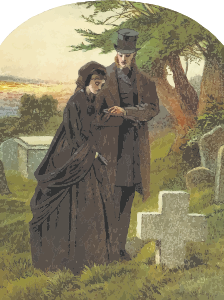
Last night my wife Jody and I recorded a conversation about grief for the Energion Publications Tuesday Night Hangout. Those who are calendar-aware, so to speak, might notice that it was on a Wednesday night. We had a technical issue, so the conversation was delayed. It was an interesting conversation, and, if I do say so myself, I think quite enlightening and helpful.
In preparation for this event, I was thinking about grief in scripture. Now I’m not one to imagine that I will find an outline of the “right” way to do grieving somewhere in scripture. In fact, there are many stories of grief, expressions of grief, and reactions to it tucked away in the various stories. Paul, who isn’t sure whether it’s best to go on to glory now or to stay with his people, so sure of he was heaven (Philippians 1:21-26), is nonetheless also distressed at the illness of Epaphroditus and the sorrow he would feel should Epaphroditus not recover (Philippians 2:25-30).
As I was thinking, however, the one example of grieving that I find in the scripture is not human, but divine. For what is the story of our faith and our salvation if it is not a story of God grieving for the separation from his creation, and the efforts God makes to heal the rift? Many Christians seem to feel that attributing such an emotion to God is a bit irreverent. It’s bringing God down to our level. We’re comfortable with anger (though “wrath” sounds more theologically proper), we’re somewhat comfortable with “love,” as it is used so many times, though we try to distinguish divine love from its human shadows. But grieving? This seems somewhat odd.
The Bible does not shy away from speaking of God in this way, as it speaks of God changing his mind and being grieved (KJV-more like provoked!) at what people do. God is not emotionless in the stories of scripture. And surely the most important story, the longest one, the one that ties our theology together is a story of grief, of seeking, and finally of redemption and reunion. God walks in the garden which God has made for the first couple, but then separation occurs and things go very sour.
God crosses the gap in the incarnation and becomes one of us. Jesus showed sorrow many times. John 11:35, the famous “shortest verse in the Bible,” says that Jesus wept. There has been much controversy regarding what Jesus was crying about. If he was about to raise Lazarus from the dead, which he does in the next few verses, why is he crying? I wonder if we might miss an obvious explanation. One can weep because of the sorrow of those who are hurt. Jesus knows what he is about to do, but nobody else does. He shares in their sorrow as one of them.
Comparing our grief with God’s separation from his creation makes the process long, but it also puts the same hope of reunion before us. God knows it’s coming, and we can too. But in the meantime, there is separation and there is sorrow. Not sorrow without hope. Not depressing, life-destroying sorrow. But real sorrow.
We don’t have to pretend that death is really a good thing, or that we are totally happy that we are missing our loved ones. But we also can look forward to the time when death is no more. Death isn’t good. Death will be defeated (Hebrews 2:14-15).
The Tuesday Night Hangout will become a Wednesday Night Hangout because of a technical glitch. We’ll do this tomorrow night at 7:00 PM central time.

Tonight I’ll be talking with my wife Jody, author of Grief: Finding the Candle of Light, in a hangout titled “Grief 12 Years Later.” We will talk about our experience 12 years after our son James went on to be with Jesus.
Many Christians struggle over the experience of grief. We hope we can help with some ideas drawn from our experience, from scripture, and from wrestling with God. Once the live discussion has concluded, you will be able to view it using this same video embed.
I’m always interested in answers to the question of why bad things happen to good people, though a pastor I know always says this is the wrong question. He says a better question would be why good things ever happen to anybody! Somebody else recently pointed out to me that in Christian theology there are no good people. Not precisely so, I say, and one might also say then that there really are not bad people either.
But more (many more) people are asking why bad things happen to good people, so we’ll go with that. Rabbi Evan Moffic provides two biblical responses and one addition of his own in his post The Hardest Question We Ask of God. I like the simplicity of the response, and it’s a good summary. I suggest you read that post before you read the rest of this one. (And while you’re there, get his free ebook Judaism Demystified. It’s just 32 pages and it covers the most common questions I hear about Jews and Judaism.)
For any who are wondering, the whole Deuteronomic history, and especially Samuel-Kings exemplifies the first response, while Job (and Ecclesiastes, in its own way) exemplifies the second. In Christian theology, Rabbi Moffic’s third option might be seen in some applications of process theology (see Bruce Epperly’s Process Theology: Embracing Adventure with God—I can’t resist a commercial!).
I’d like to add two notes, one on Christian theology and one as a personal response.
For many Christians, the response to bad things happening to good people is the devil. The devil does the evil things. This blurs the distinction between the first and second answer, in that while bad things come as consequences of someone’s action, it is not God’s action that is in question, thus the mystery remains of where, when, and why God permits such things. This tends to result in a great deal of misreading of the book of Job by Christians. Satan (hasatan-the adversary/accuser) is not here an independent entity as in much Christian theology. He has access to the court in heaven, and acts in concert with God, at least. I don’t find that the idea that the devil caused something helps very much, but some do.
My personal observation relates to the death of Jody’s and my son James, who died of cancer at age 17. Jody and I find comfort in different explanations, but I think both are explanations that would fall under Rabbi Moffic’s second point. For Jody, God is in control, but the why is a mystery. She believes that she sees God bringing good out of bad, but she doesn’t expect to understand this side of heaven. I, on the other hand, tend to see God involved in less detail. God is the one who ordained certain physical processes, and when the causes come together, cancer results and often kills. James died not because of some specific will of God that he die, but rather that nature functioned as God ordained. God and the people who knew and loved James bring good out of what happened to the extent we can. Feed in a bit of Rabbi Moffic’s point 3 there as well!
What’s interesting to me is that Jody and I have taught together in churches a number of times during James’s illness and since his death. One might think that having two people explain this so differently to the same audience would just be confusing, but that isn’t the case. Some people resonate with one explanation, and some with the other. The critical thing is that people find a way to live with grief and loss.
Last night Bob LaRochelle hosted a discussion with my wife (and author) Jody Neufeld and author Ron Higdon. This was a Google Hangout on Air and the video is now available. This is unedited with no titles as yet. I think there were many valuable points made in the discussion.
There are three critical things I’ve learned about grief:
1) It gets worse at certain times.
2) It’s different for everyone.
3) To help, you have to listen and observe, and act on what you learn.
I’m not the expert on grief. My wife knows a great deal more. In September we passed the 10th anniversary of James’s death. It wasn’t fun. You think after 10 years you might be done. Besides, as I said, it’s different for everyone, and anniversaries haven’t been my worst moments. Until this year. Let me be encouraging here. You don’t forget the one you’ve lost, but you do learn to live with your new normal. I actually find both elements of that encouraging. I don’t want to forget James. I doubt I’m in any danger of doing so in any case. But at the same time, I need to learn to live with reality as it is now.
As Christmas approaches we’ll remember how much he liked having some decorations and activity related to the holidays. He also loved to both give and receive gifts. Those are great memories.
For many people, this is the worst season precisely because of those memories. If you are living through grief, remember to take care of yourself. If you know people who are missing loved ones at this season, be there for them. Listen, learn, and when it’s helpful, act.
As I was preparing to write this, my wife commented that she had just written two cards that were very difficult to write. One responded to loss in a family. The other responded to great hardship. Those cards she sends out is one of the ways she helps share the burdens of those who grieve.
If you’d like to learn more about this, join her and Ron Higdon as they discuss grief in the holidays tomorrow night, Tuesday, November 4, 2014 at 7 pm central time. The host will be Pastor Bob LaRochelle. Jody and Ron have each written books, and they know some of the things that help and some of the things that don’t. Don’t just wait for things to go wrong for yourself or those you love. Get equipped!

The first thing I acknowledge is that I grieve just like everyone else; I do not grieve as a minister. I have the very same emotions, the very same needs as all persons who experience loss. (p. 20)
This is from the forthcoming book Surviving a Son’s Suicide by Ron Higdon. It’s interesting that I’m editing a book regarding grief on today of all days. But so it goes.
This line is so incredibly important, both for ministers and for lay people (who should all be ministers!) to remember. Pastors expect certain things of themselves that are not realistic. Congregations expect unrealistic things of pastors. To a lesser extent, I saw this in our own experience both while James was fighting cancer and while we were dealing with grief. I’m not an ordained minister. I am a publisher, and by inclination a teacher. Yet people wondered why those who taught could not always face life according to their own teaching.
Of course we never taught that we, or anyone else, would deal with such things perfectly. Positions of leadership or other activities that put one in the public eye do add a dimension to dealing with difficulties or with grief. But the person still grieves as a person. That path is individual.
I want to call attention to Dave Black’s blog. I’ve posted some extracts over at The Jesus Paradigm, the support site for one of Dave’s books I publish.
Dave’s site doesn’t provide an option to link to specific posts. It is very much like an online journal. I can’t link to every specific item that I hope you read. But if you’re dealing with loss and grief in any way, I believe you’ll find Dave’s openness about his experiences helpful. Just start with the present and work your way back.